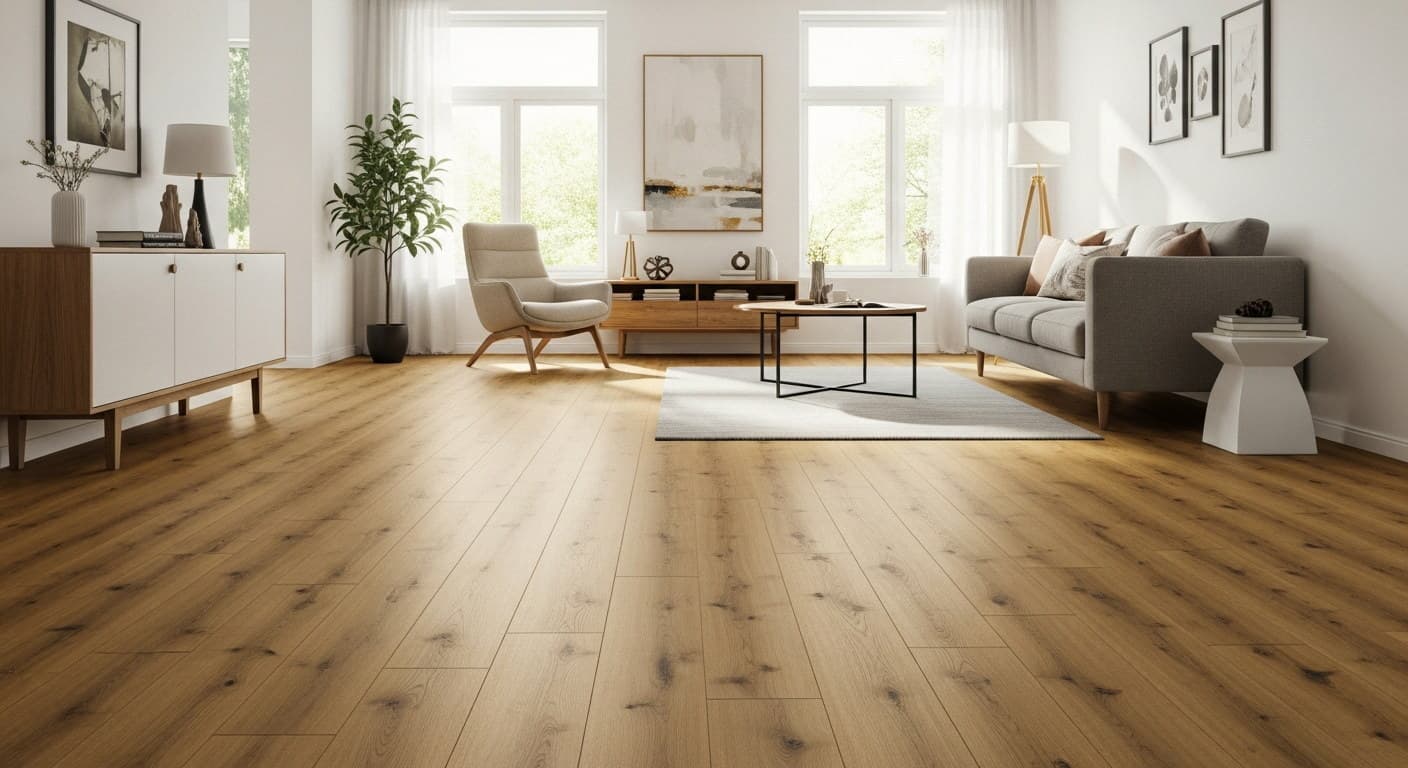
LVP took over Cincinnati kitchens for a reason. It handles water, holds up to kids and pets, and looks like real wood without the refinishing headache. But "low maintenance" doesn't mean "zero maintenance," especially here, where humidity swings from 30% in January to 80% in July can work against your floors in ways most homeowners don't expect.
Here's what our installers tell every homeowner after we finish a job.
Why Cincinnati's weather is actually hard on floors
Every floor material moves with temperature and humidity. Wood warps. Tile cracks if the subfloor shifts. LVP handles this better than most, but it's not bulletproof.
The problem isn't any one extreme. It's the range. We go from dry furnace-heat winters to sticky August humidity, and LVP expands and contracts through all of it. Installed with the right expansion gaps along every wall, that movement is invisible. When those gaps get closed off (furniture pushed tight against baseboards, no quarter-round trim installed), the floor has nowhere to go. It buckles.
We've walked into homes where this happened a year after someone else did the work.
If your floors are already down: run a humidifier in winter and target 45 to 55% relative humidity year-round. That narrows the swing. Your floors and your wood furniture will both appreciate it.
Daily care is honestly simpler than you think
Sweep or vacuum once a week. That's the whole routine.
Fine grit acts like sandpaper on the wear layer over time. The quartz particles in sand and concrete dust are hard enough to scratch vinyl's surface coating, especially in the high-traffic paths near doorways and hallways. Catch it with a vacuum before it catches your floors.
For cleaning: damp mop with a pH-neutral cleaner or a few drops of dish soap in a bucket of warm water. We use Bona on our own floors. Wring the mop out well. You want the floor damp, not soaking. LVP handles surface moisture fine, but standing water sitting in the click-lock seams over time is a problem.
What to skip entirely: bleach cleaners, wax, polish, and steam mops. Steam is the worst offender. It drives moisture into the joints and causes swelling that can't be undone without replacing planks.
Winter: salt tracks and mudroom damage
Cincinnati winters mean road salt, wet boots, and slush tracked in from the garage. That combination is rough on floors.
Rock salt is abrasive on its own. The real issue is brine, the salty water it creates when it dissolves. Brine can work into click-lock seams over time if puddles just sit there.
Quick fix: a commercial entrance mat at every exterior door. Not a rubber-backed rug (those trap moisture underneath). A proper mat that lets water evaporate. Wipe up puddles same-day. Don't let wet boots sit directly on the floor overnight.
If you're putting LVP in an entryway or mudroom, go with a product that has a waterproof core all the way through, not just a water-resistant surface treatment. Shaw Floorté, COREtec, and similar products hit that standard. Cheaper click-lock vinyl might not.
Summer: heat, humidity, and the UV problem nobody mentions
Summer care is mostly hands-off. Keep the house under 85°F for extended stretches (thermal expansion in LVP starts to get noticeable above that) and you're fine.
One thing people miss: sun fading. LVP with a quality wear layer holds its color well, but direct UV exposure through south or west-facing windows over years will discolor the boards nearest the glass. Curtains during peak sun hours help. Window film is better.
This mostly matters for living rooms and sunrooms. Kitchen and bath floors are usually shielded enough that it's not a practical concern.
Kitchen scenarios: spills, grease, and moving appliances
LVP is genuinely at its best in kitchens. Dropped egg? Wipe it up. Cooking grease? Warm water and dish soap, done.
What damages kitchen floors isn't spills. It's dragging. Chairs scooted back from a table dozens of times a week grind fine grit into the wear layer. Put felt pads on every chair leg and table leg. Check and replace them annually, because they collect debris and stop working.
For appliances: refrigerators and dishwashers need furniture sliders underneath. Not just because of weight, but because rolling them out for cleaning will scratch. We've seen drag marks from refrigerators that took the finish off an entire plank in one pull.
Choosing the right product matters more than maintenance
Here's something we tell homeowners before they buy anything: wear layer thickness is the single number that matters most for longevity.
A 6-mil wear layer is fine for a low-traffic bedroom. A 12-mil wears better in a kitchen or hallway. A 20-mil is what we spec for mudrooms and any household with dogs and kids. That number tells you how long the floor will actually look good before the surface dulls.
The waterproof core matters too, in basements and entryways most of all. "Water-resistant" and "waterproof" are different claims. If the floor says waterproof, the entire core is sealed. If it says water-resistant, the surface coating handles spills but sustained moisture from below can still cause problems. Ask before you buy.
What's actually under your floor
This part catches people off guard.
LVP is a floating floor. It sits on top of the subfloor without being glued or nailed down. If the subfloor shifts, softens, or develops a moisture issue, you'll feel it in the floor above before you see it.
A soft or bouncy spot that wasn't there when the floor was new usually means subfloor moisture. Check the obvious sources: plumbing leak nearby, sump pump backup, HVAC condensation drain. Catch it early and you're looking at a subfloor repair. Catch it late and you may be replacing both.
We test moisture on every subfloor before we lay anything. Not every installer does. LVP manufacturer warranties typically require a dry, flat subfloor, so if yours wasn't tested at installation and you're having problems, that's worth knowing.
When to call a pro
Most of what's in this guide is homeowner territory. But call us if you're seeing:
- Seams separating or a section lifting from the subfloor
- A crack in the wear layer over a hollow spot
- Bubbling or discoloration in one area, especially if it appeared suddenly
- A full-room buckle pushing against the wall
The good news: because LVP floats, repair work is usually section-specific. We can pull affected planks, fix what's underneath, and replace them without touching the rest of the installation, assuming it was done floating and not glued.
We do repair visits across Greater Cincinnati.
Need LVP installed right the first time? Call 513-204-9797 or get a free on-site quote at mmproinstalls.com.
Meta description: Keep your LVP floors looking new in Cincinnati. Seasonal maintenance tips from local installers covering humidity swings, winter salt, kitchen spills, and when to call for repairs. 513-204-9797.